
Dr Jarrod Dunne

Dr James Parsons
Dr Jarrod Dunne
QIntegral Pty Ltd, Ivanhoe, Australia
Dr James Parsons
QIntegral Pty Ltd, Ivanhoe, Australia
Overview
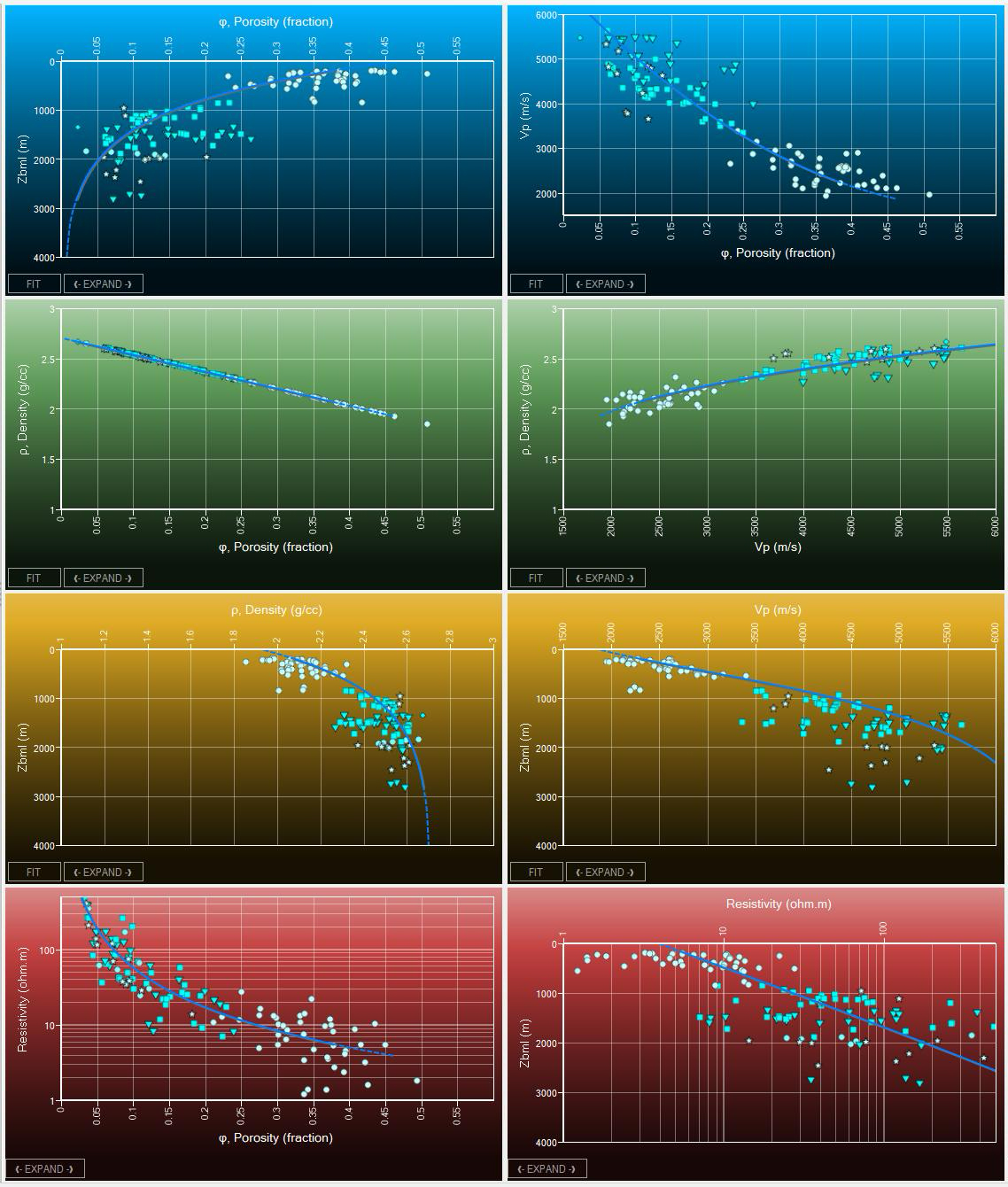
Sedimentary rock physics can play a vital role in constraining quantitative geophysical methods across a wide range of applications, but getting started might seem a daunting task. This workshop provides a practical, software-based introduction to the topic, where the emphasis is on real data examples and not on esoteric mathematical equations or unwieldy spreadsheets.
Participants receive introductory seminars on the topics of petrophysics and explorational rock physics followed by guidance in the use of suitable rock physics trend formulation software (Windows-based). After loading pre-prepared well log data, the class exercises will focus on formulating accurate and self-consistent elastic and electrical rock physics models for different sedimentary lithologies and pore fluids.
To get the most out of these workshops, participants are encouraged to bring a Windows laptop on which it is possible to install software.
Please note: although designed as a full day workshop, participants are welcome to attend either or both sessions
Key topics: Explorational rock physics, elastic and electrical properties, sedimentary burial (compaction), integration, geophysical modelling and inversion, time/depth conversion, stochastic rock physics templates, mineral exploration under cover, CCUS, petroleum and H2/He exploration.
What are the learning outcomes?
AM session 1 – Seismic Petrophysics
-
workflows for improving the constraints upon geophysical modelling and inversions when exploring under sedimentary cover,
-
the basics of drillhole geophysical data acquisition
-
how to prepare wireline (petrophysical) data for rock physics (depth trend) analyses
-
the basics of rock physics for sedimentary rocks (non-mathematical approach)
-
how to formulate integrated elastic and electrical rock physics models from wireline data
-
how to build and use statistical rock physics templates to guide geophysical data interpretation
Who should attend?
Minerals geophysicists interested to learn how rock physics trends can better constrain the modelling and inversion of gravity and conductivity data. Petroleum geophysicists keen to augment seismic interpretations using gravity and resistivity data. Seismic processors looking to constrain velocity models and improve seismic imaging. Geoscientists involved in identifying prospective areas for H2/He exploration and H2 or CO2 storage and monitoring.